
Streamflow Restoration
Establishing adequate instream flows—essentially a water right granted to the river itself—is one of the best legal tools we have to ensure sustainable water management and build climate resiliency.
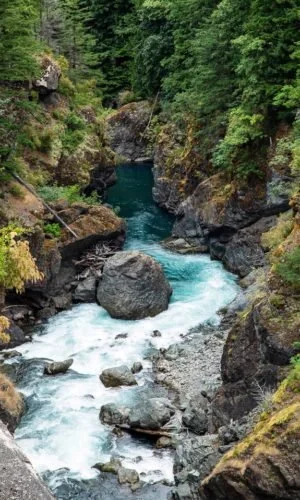
Understanding Instream Flows
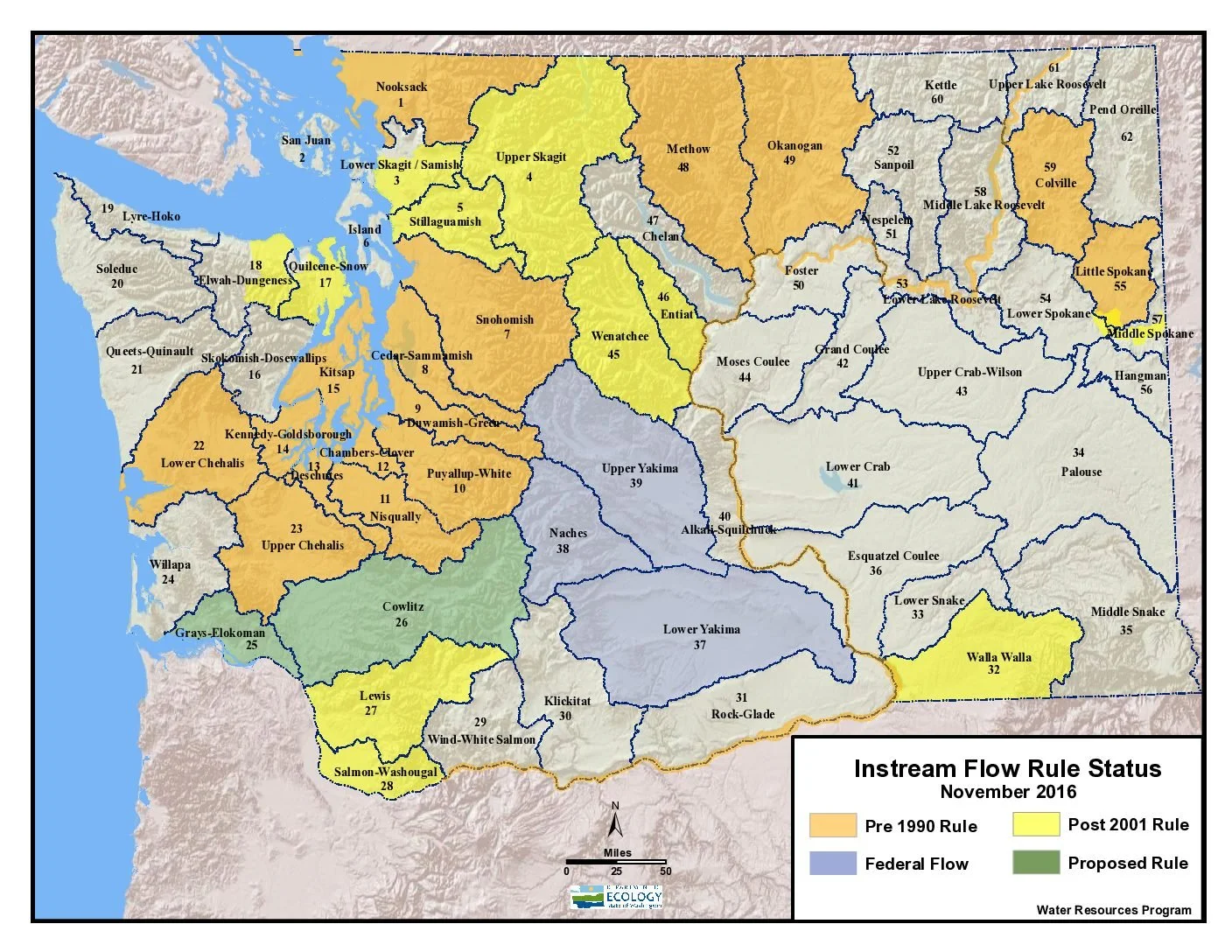
The Center for Environmental Law & Policy is a statewide 501(c)(3) nonprofit whose mission is to protect, preserve, and restore Washington’s waters through education, advocacy, policy reform, and public interest litigation.Sound science is vital to the management of natural resources, especially when managing water. An instream flow is used to identify the rate of water flow, measured in cubic feet per second (cfs), required at different times of the year at a specific location in a waterway. Instream flows protect the river from new withdrawals that would threaten the availability of water needed to ensure healthy aquatic habitats to sustain wildlife, provide excellent recreational opportunities, and support agriculture and domestic uses. Seasonal changes cause natural stream flows to vary throughout the year, so instream flows usually vary from month to month rather than one flow rate year-round. Once instream flows are set, when actual streamflows drop below the adopted instream flow levels, junior water rights (those established after the instream flow) can be temporarily curtailed to keep the water in the stream. For all intents and purposes, an instream flow is essentially a water right granted to the river itself. Establishing this base protection helps guarantee the longevity of our water resources and provides assurance that they will continue to bolster our economy and keep Washington uniquely beautiful indefinitely. The Center for Environmental Law and Policy is currently working towards adoption of instream flows in Southwest Washington.
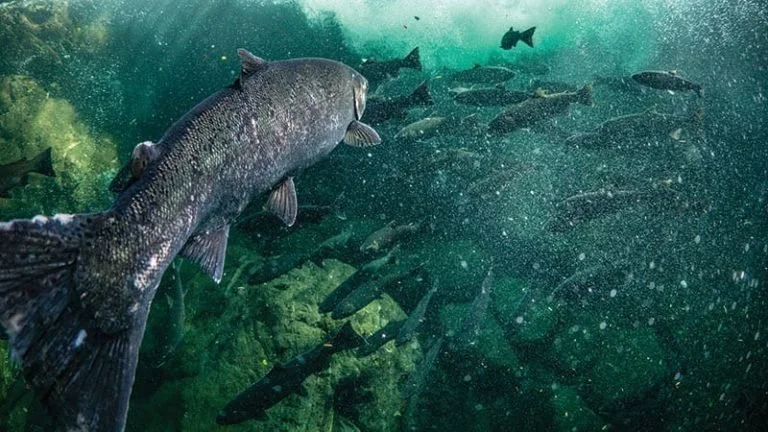
Fish-Flows Determine Instream Flow
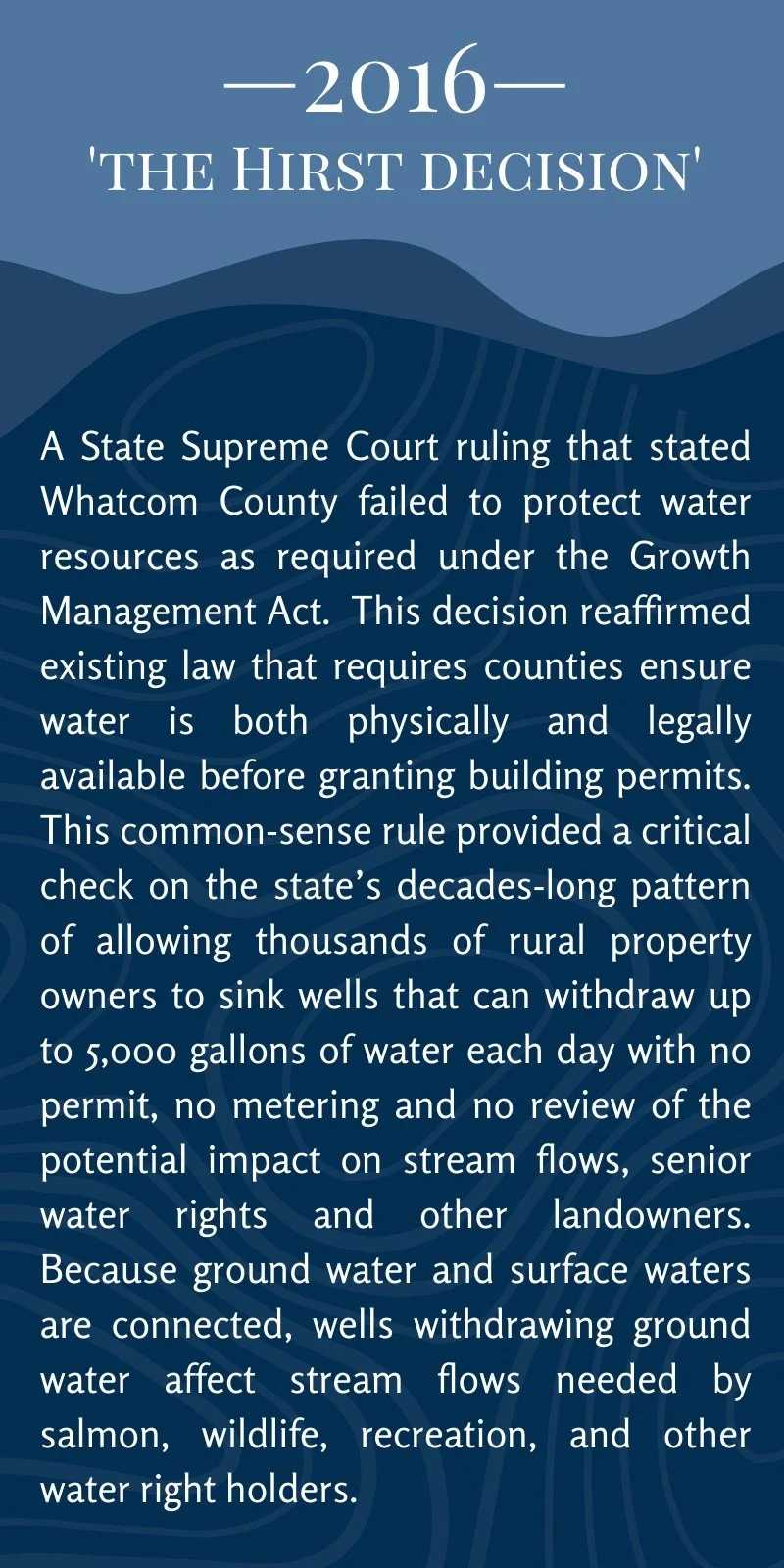
In 2016, a Washington State Supreme Court ruling drastically altered how Washington state addresses water use and rights. Known as “the Hirst decision” the court ruled that Whatcom County failed to protect water resources as required under the state Growth Management Act. Under the decision, counties are now required to make an independent decision about legal water availability before issuing building permits for a new home or subdivision. Previously, it could rely on findings from the state Department of Ecology.
Prior to the ruling, homebuilders and/or homeowners in rural areas, namely unincorporated properties not within the boundary of a water utility or system, could get water by drilling a well. In general, any person or organization is required to secure a right to use that water, but wells were considered exempt because of their relatively ‘low usage’ (defined by the state Department of Ecology as 5,000 gallons or fewer per day). The Hirst decision eliminated this decades old practice of granting those exemptions.
Frequently Asked Questions
-
A: It won’t. An instream flow is junior to any pre-existing water rights and can’t affect them. Even if the flow is not being met, water rights that predate the flow rule may use water. In fact, instream flows protect existing water rights because they ensure that the river won’t be further over-allocated.
-
A: No. Establishing instream flows does not mean there is no opportunity to obtain new water rights for projects proposed after the flow rule. Interruptible water rights that are usable whenever flow levels exceed the instream flow can still be issued. There is also always the option to obtain a water right by mitigating use to avoid impacts on the instream flow.
-
We combine a thoughtful, human-centered approach with clear communication and reliable results. It’s not just what we do—it’s how we do it that sets us apart.
-
![]()
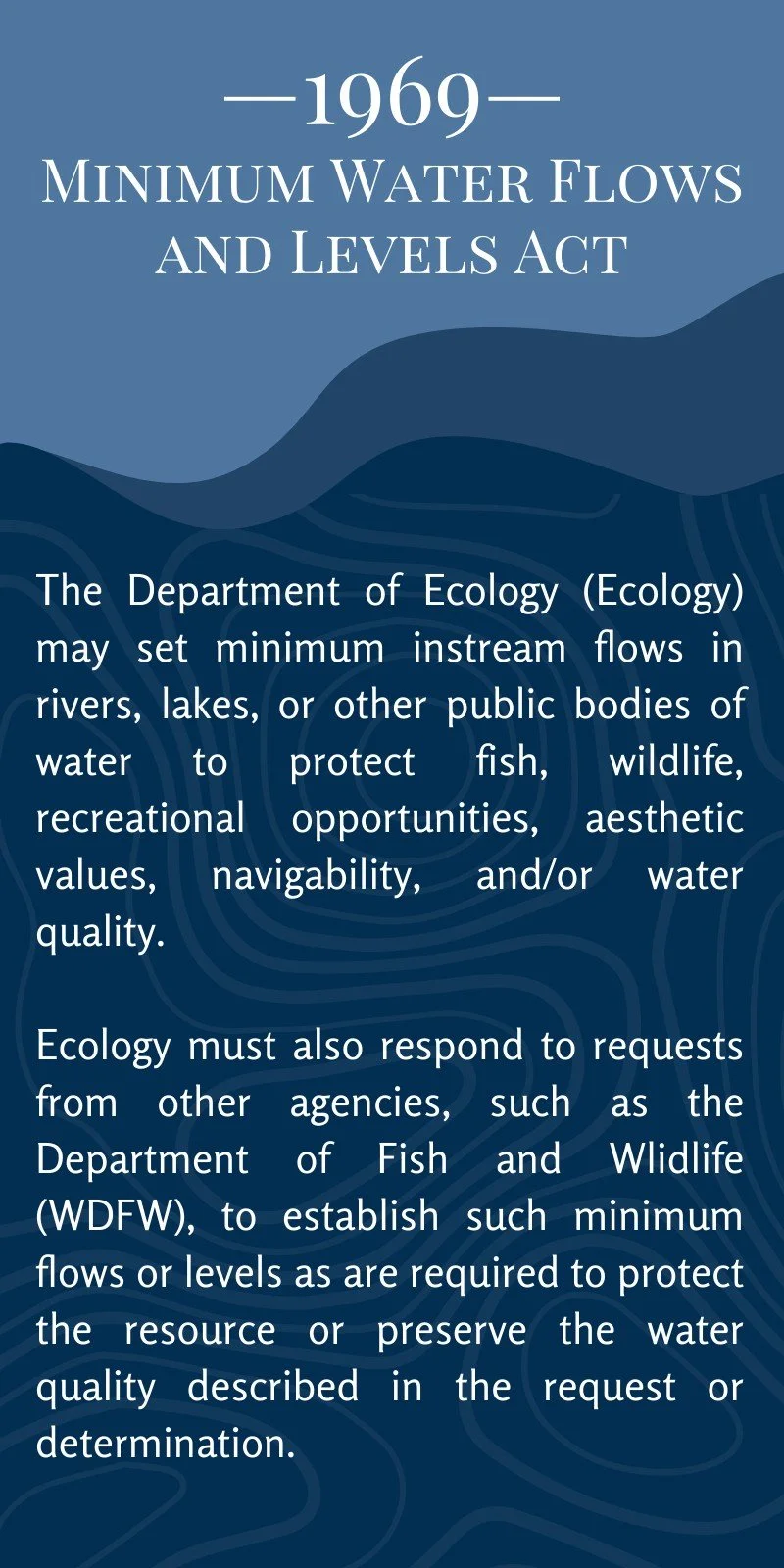
Legal Precedent 1969
-
![]()
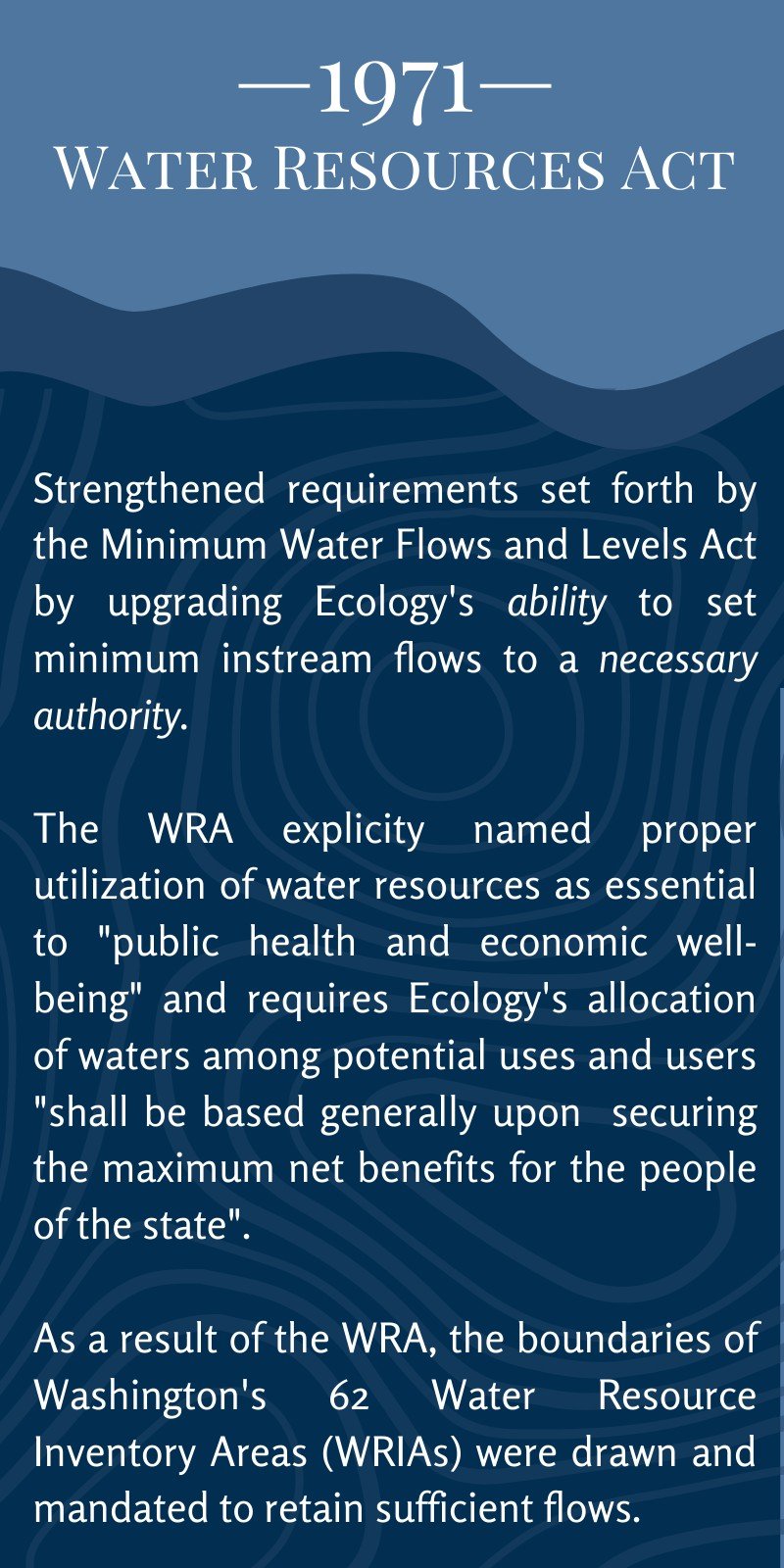
Legal Precedent 1671
-
![]()
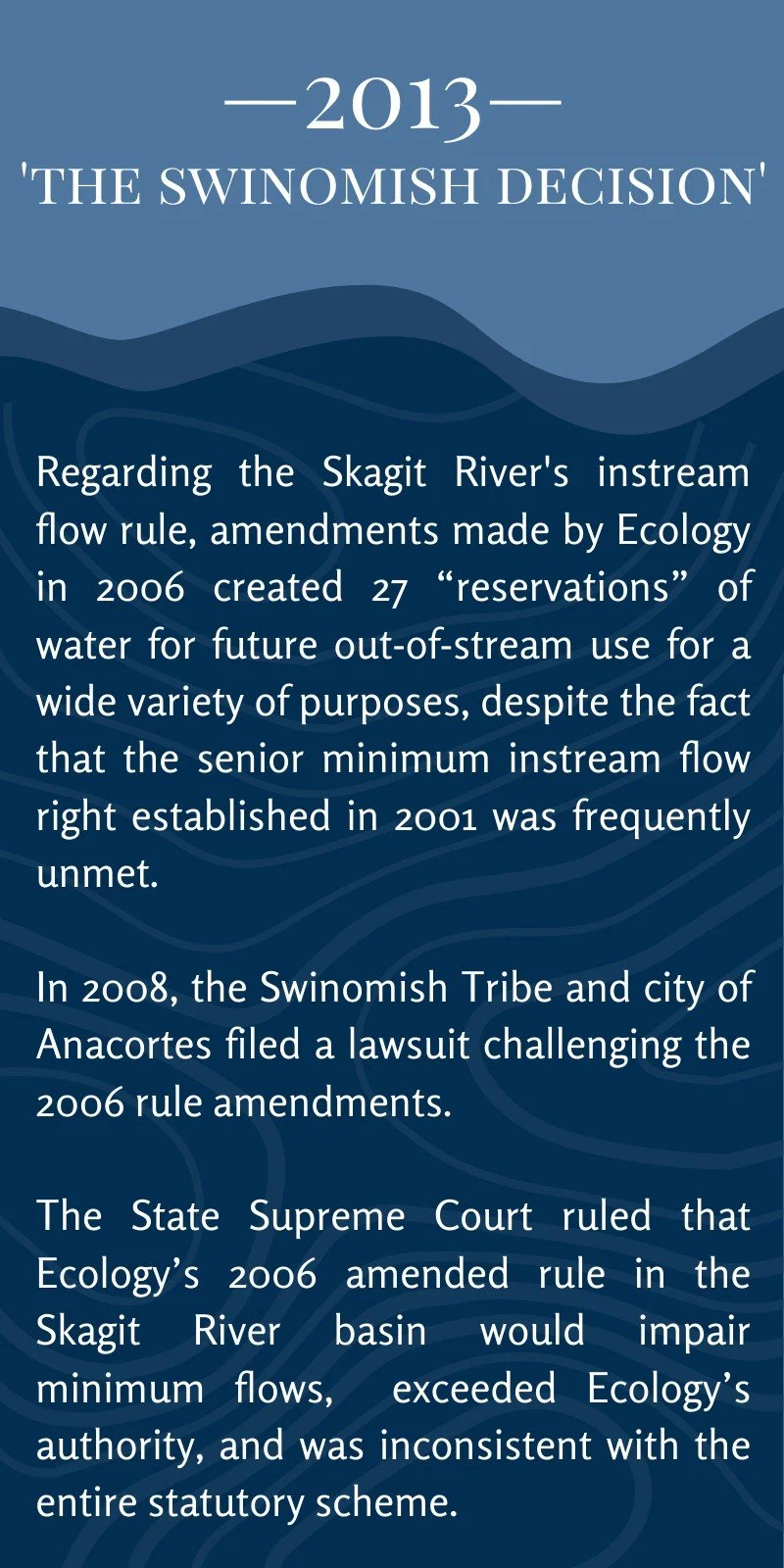
Legal Precedent 2013
-
![]()
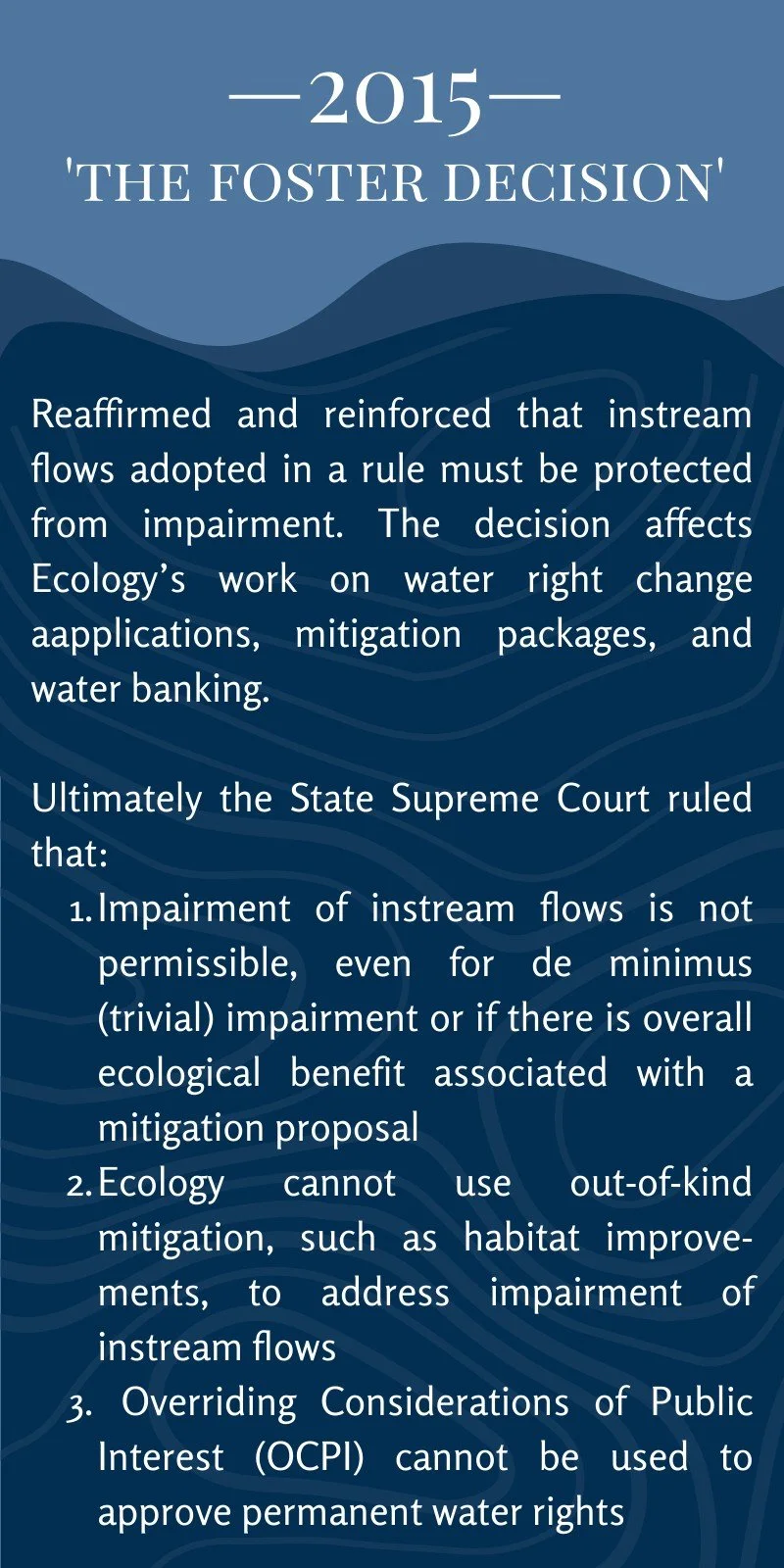
Legal Precedent 2015
-
![]()
Legal Precedent 2016
-
![]()
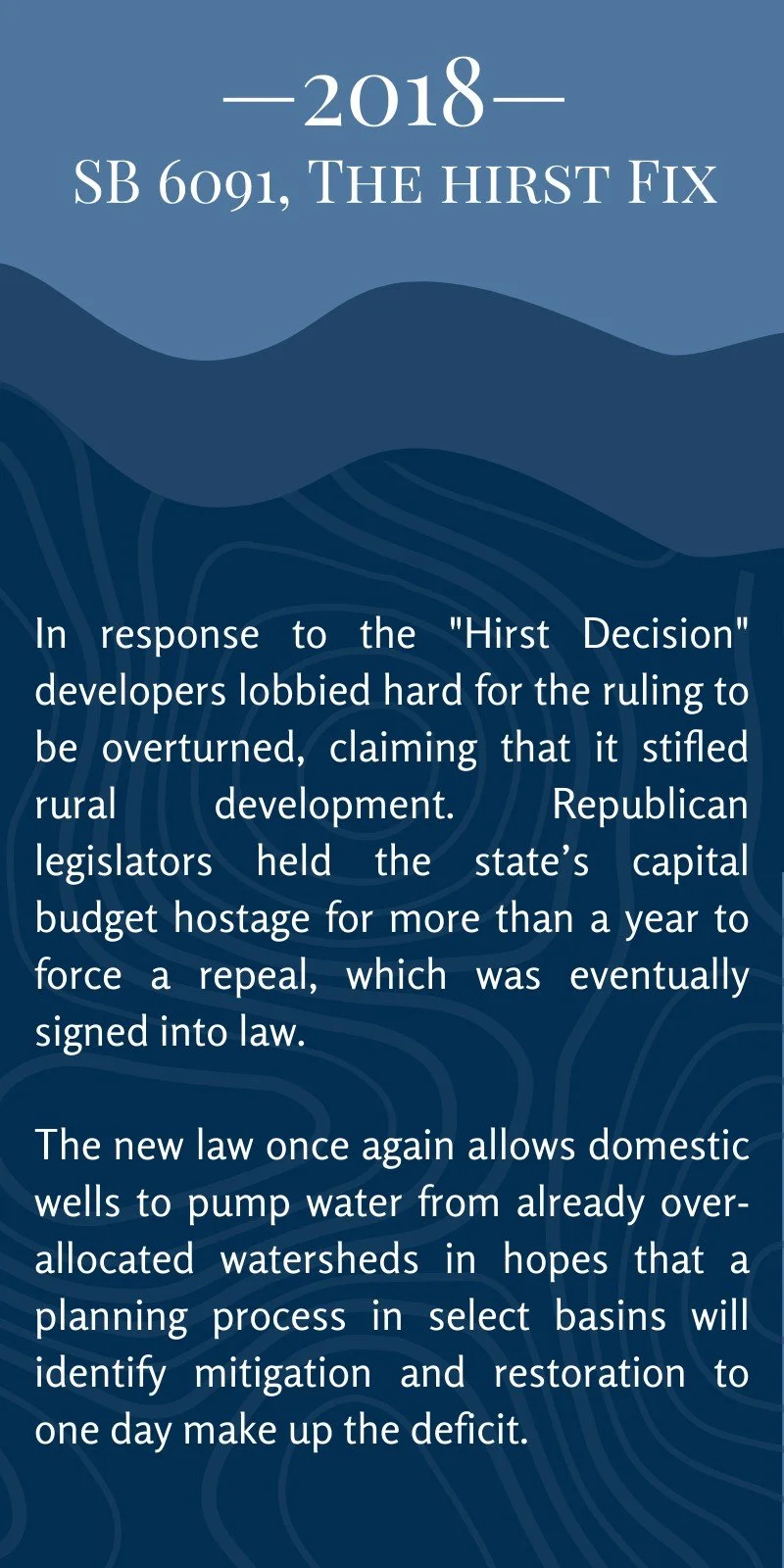
Legal Precedent 2018
Where We Are Today
“Perhaps our ancestors, our fathers, we ourselves not too long ago were willing to throw away as worthless some scenic, recreational, and environmental factors. Perhaps they were regarded as worthless because of their abundance, but now we realize what is left is far from abundant, that it is scarce, partly because we have already thrown away so much, partly because there are now so many of us that we compete with each other for what is left, and partly because the opportunities for enjoyment have been broadened by the automobile and highway. The law is a mechanism for getting things done, for accomplishing the purposes of society, for requiring some things and forbidding others. If the people of the United States or of a state desire to keep water in a stream or to put it back in a stream a law can be framed that will do the job.”
–Frank J. Trelease, Dean Emeritus University of Wyoming College of Law
CELP’s Work

Argued Case to Uphold Dungeness River Instream Flow Rule
.In October 2016, Thurston County Superior Court Judge Gary Tabor upheld the Instream Flow Rule for the Dungeness River basin, denying a challenge from a group of property owners and developers. CELP Staff Attorney Dan Von Seggern intervened to defend the Rule, arguing the case alongside Ecology’s attorneys.
After the decision, he stated: “This is a win for the environment and for water management in Washington. The Dungeness Rule strikes a balance by protecting streamflows, fish, and senior water users, while still providing water for responsible development. CELP is pleased with Judge Tabor’s decision and hope that this Rule will provide a guide to protecting other rivers in our state.”
In upholding the Rule, Judge Tabor held that the Rule was not unlawful and that Ecology did not exceed its authority when it adopted the Rule. He also reaffirmed that permit-exempt wells are subject to the “first-in-time” system of water appropriations used in Washington.

Legal Support Leads to 'Swinomish Decision' Preserving Skagit River Instream Flow
Along with partner Earthjustice, CELP filed a friend of the court brief with the Washington State Court of Appeals in support of the Swinomish Indian Tribal Community and its ongoing effort to protect the Skagit River and salmon. In the brief, Earthjustice and CELP argued that Ecology cannot allow more water to be withdrawn from the troubled Skagit River and its tributaries for new junior water uses because such new uses would further impair stream-flows.
Ultimately, the State Supreme Court ruled in favor of the Swinomish Tribe in 2013.
“This decision is a huge victory for Swinomish, for salmon and for the water that salmon need to survive,” said Swinomish Chairman Brian Cladoosby. “Ecology had a choice to do the right thing or the wrong thing in 2006, and unfortunately, it chose to do the wrong thing. The court’s decision vindicates the tribe’s position and confirms that Ecology cannot make an ‘end run’ around laws that protect instream flows for fish.”