A new proposed federal rule from the Trump Administration revives a long-standing effort to deregulate…
Washington Water Watch – December 2025
Letter from your Executive Director: 
Commitment and perseverance. Innovation and collaboration. Knowledge and policy expertise. Justice. These are the attributes of CELP’s legacy that drew me to join the team as your new Executive Director. After working internationally for the last six years, I am excited, honored and humbled by the opportunity to rejoin the fight for the health of Washington’s waters!
As a CELP supporter or member, you know the waters of the Pacific Northwest are under increasing threat from climate-driven droughts, flooding, pollution, water diversions and habitat loss, which add on to the existing pressures of dams, industry, agriculture, roadways and urban development, and now: increasingly uncertain federal regulation.
Our iconic salmon, survivors for millennia, help define the region. But they face an uncertain fate. Tribal fishing rights, on strong legal footing, still must be regularly defended, especially when it comes to protecting our most precious resource: water. Cold, clean water is a requirement for salmon and all they help sustain.
I look forward to working with you and our many partners to advance the cause for clean flowing water from the Coast, to the Cascades, to the Columbia and Snake River Basins and everywhere in between. And whether you are one of our founding icons, a volunteer, a policy wonk, a generous donor, or anyone who cares about clean water, healthy rivers, fish, birds and wildlife, sustainable communities, estuaries and coasts, I’d love to learn from you and share ideas!
If you have an idea, question, environmental or climate concern, or something you think I just might need to know about CELP’s past, or the road ahead, you can reach me at the office phone or by email. As a lifelong Washingtonian I also just love to talk about the amazing parts of our state and what we need to do to better protect or restore our waters.
See you on the water,
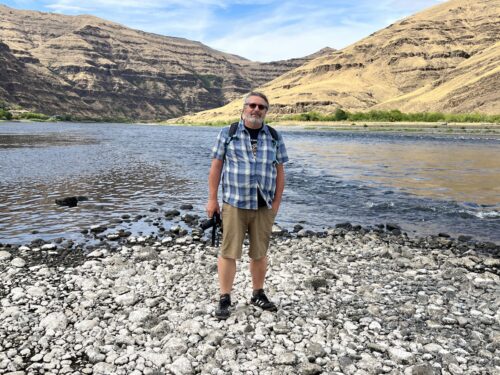
Chris Wilke, Executive Director
Weather Whiplash! Yakima Drought and December Floods
 **Special Note** If you or your community are impacted by the current flooding emergency, or the multi-year drought, our hearts go out to you. We hope you are staying safe and are taking appropriate precautions and care. And if there is any part of this story we may have missed or got wrong, please let us know: contact@celp.org.
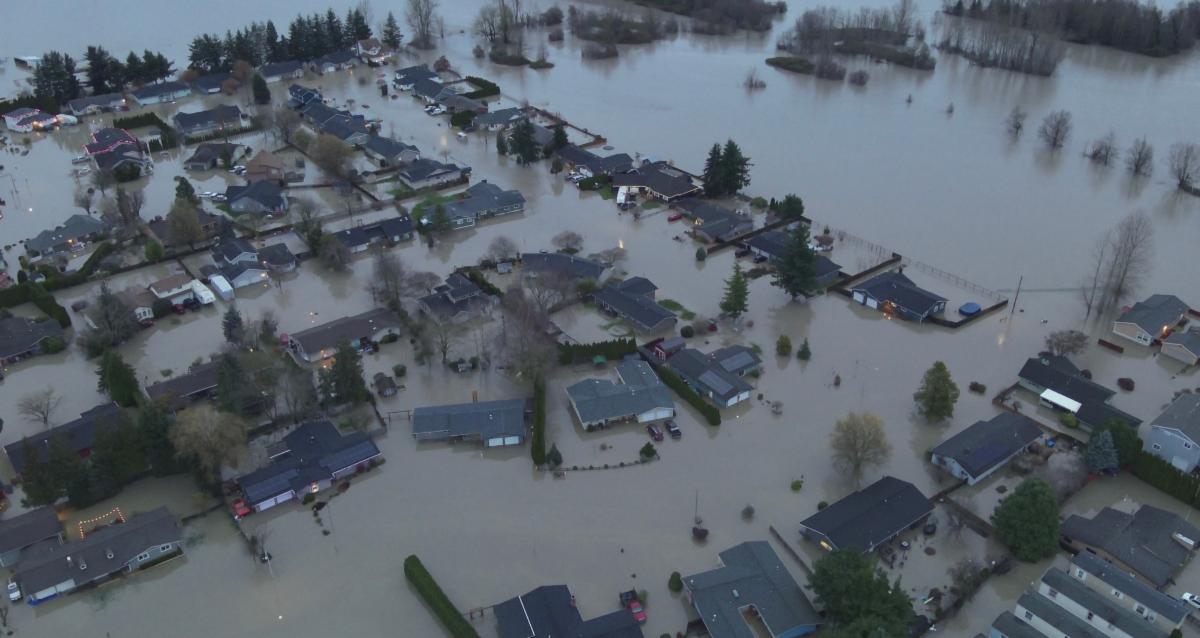
Photo: Flooding in Everson, Whatcom County (Whatcom County photo)
The awesome power of water –too much all at once, or not enough of it over time– provides a warning for our communities and Washington’s rivers and salmon. We can have record floods, overlapping with record droughts. This is climate change in Washington State.
The mighty Skagit River, beginning high in the North Cascades glaciers, gathers volume from its tributaries to become one of the largest river systems on the U.S. West Coast. It is home to eight species of salmonids, including all five Pacific Salmon species, famously large steelhead trout, and one of the healthiest populations of endangered bull trout. Though the Chinook salmon and steelhead are also threatened, there is a lot of potential for recovery here. It is hard to imagine successful salmon and orca recovery in Puget Sound that doesn’t involve a more productive Skagit River. Toward this goal, three area tribes just marked an historic settlement to help mitigate the impacts of hydroelectric dams on the river.
Fifteen feet above major flood stage: the town of Concrete, on the Skagit River posted this incredible flood statistic on Thursday December 11, due to two atmospheric rivers delivering back-to-back early winter rain events that quickly brought many Washington State rivers into historic flood conditions –inundating communities, damaging homes, scouring salmon habitat, and releasing toxins and pollutants along the way. Governor Ferguson declared an emergency and requested federal assistance. Thankfully no deaths are yet reported as of this writing – a testament to preparedness and responders.
Lower down on the river near Mt. Vernon and Sedro Wooley residents in the 100-year flood plain were issued “Leave Now” evacuation notices. Homes and property are destroyed, livestock and crops impacted, and salmon habitat marginalized. And, scientists tell us that we can expect more of this as the climate warms.
Of course the Skagit is not the only river experiencing catastrophic flooding, as dozens of rivers are in flood stage. As we go to print, much of the damage is still being assessed and some of the rivers have not yet crested. Rescue operations are undoubtedly underway. At CELP this reaffirms our belief that climate work is water protection work (and vice-versa).
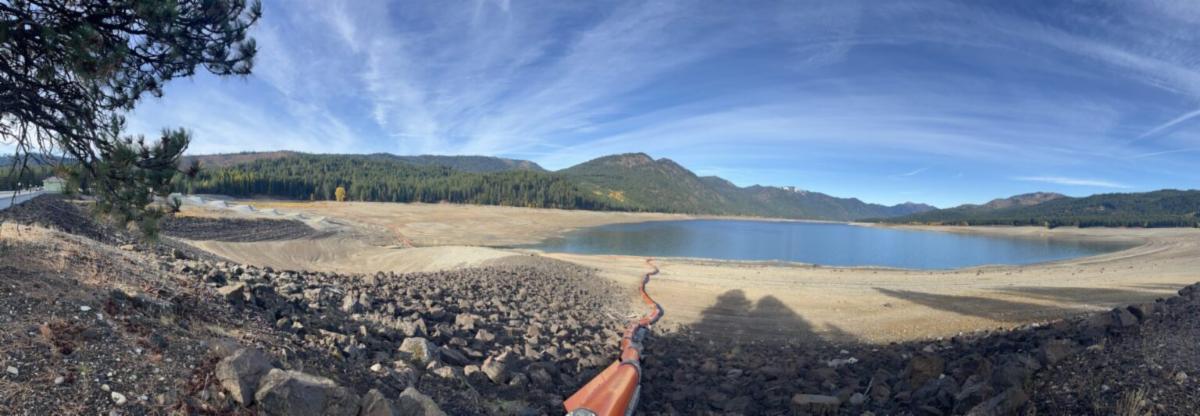
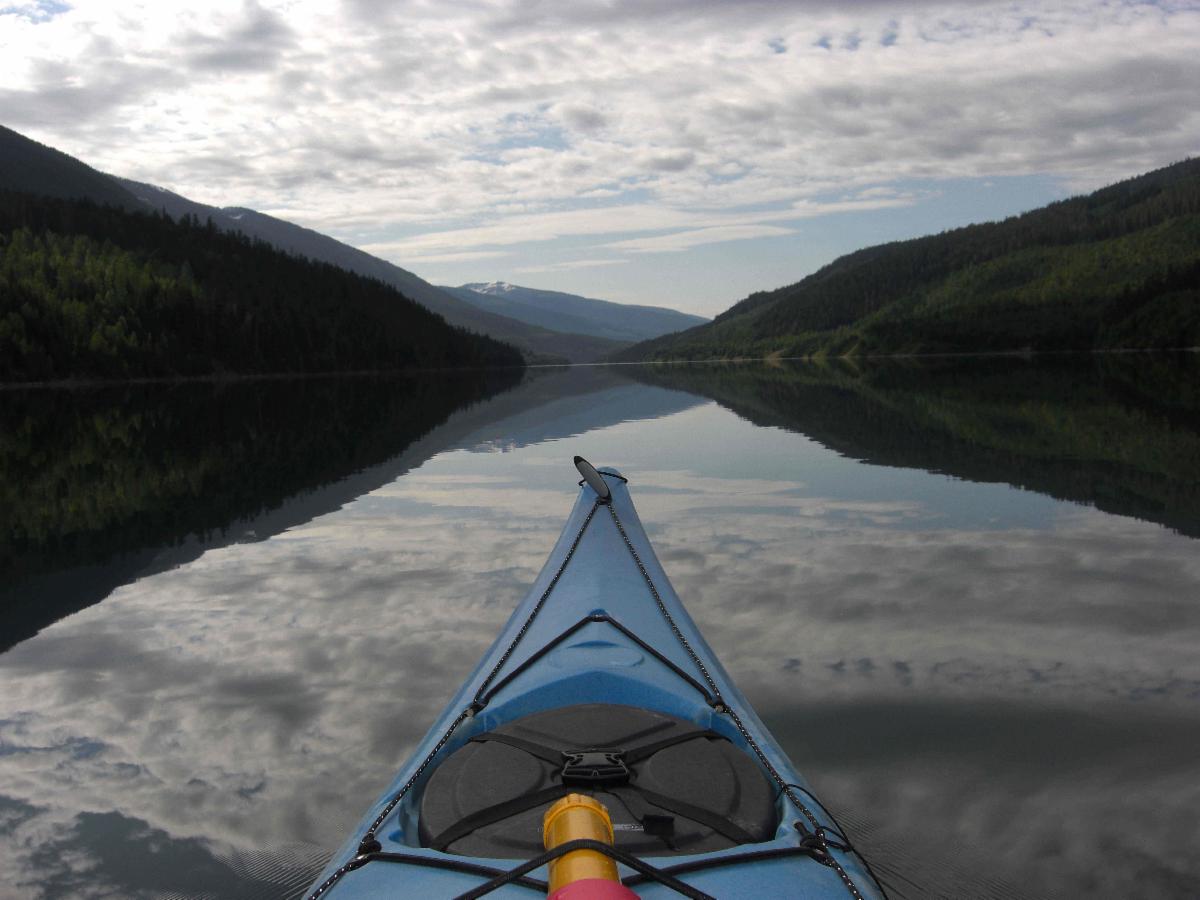
Photo: Cle Elum Reservoir, October 2025, Upper Yakima Basin, Chris Wilke/CELP
Just ten weeks earlier, the Yakima River Basin was also sounding a different alarm for all who care about Washington’s rivers. This iconic river –the longest river entirely within Washington State– flows from its headwaters near Snoqualmie Pass through picturesque forests, farmland, canyons, vineyards and desert, eventually connecting to the Columbia River at Richland. Along the way, it provides water for nature, fish, agriculture and people. In a normal year, it’s a challenge to balance these needs, but it is especially challenging during a drought.
In October 2025, after three consecutive years of drought, the state issued an order that halted or sharply restricted many water withdrawals in the basin, leaving agricultural operators and municipalities scrambling. Reservoirs that should have held at least 25% of capacity were down to as little as 8%. And, for the first time, only the oldest water rights, including those reserved in the 1855 Yakama Treaty, were able to be fully honored.
For a deeper dive on the Yakima drought: CELP worked with Climate Media Guild to produce this explainer piece. You can read the State’s Order of Drought Declaration here.
Despite the persistent drought, there is some hope, thanks to the hard work done over the last few decades. Minimum flows set for the lower river help ensure that a critical amount of water stays in the channel, even during drought years. Groundwater, which feeds the river with cool water, has been kept from over allocation on several occasions, in part due to historic litigation from CELP and the Yakama Nation. And, the Yakima Basin Integrated Plan is improving fish passage, restoring flows, and protecting habitat.
Still, the drought is a wake-up call, and not just for the Yakima, but all around the state. And yes, even in the Skagit Basin, where much of the year saw very low water levels, creating unsafe conditions for salmon. Intense rain events are temporary, and drought conditions are expected to return with increasing frequency in coming decades. Our ecosystems are adapted to (and our water systems are engineered for) a cooler, snowier world that is increasingly disappearing.
To restore salmon and keep our rivers and communities healthy, Washington must manage our water with the climate we have now, and with an eye toward adapting to more severe and frequent drought conditions in the future. Ultimately, protecting our rivers will require however that we address the root causes of the climate crisis, including fossil fuels and other sources of greenhouse gasses.
With the backing of supporters and members like you, CELP is working for better resilience through conservation, restoration, pollution reduction and sound water and climate policy.
Year-End Fundraising in Full Swing!
 The end of the year is a critical time for most non-profit organizations, and we at CELP are so grateful for the generosity of our members and supporters! With help from people like you, it’s our chance to strengthen support for protecting waterways and grow our impact in the coming year.
Fortunately, CELP donors are off to a great start! And a team of donors from our Board of Directors is potentially doubling your impact: All donations before the end of the year will be matched up to $7500!
#GivingTuesday Thanks!
Thanks to everyone that participated in #GivingTuesday on December 2! With your help, CELP’s Giving Tuesday donors chipped in $2490, which put a sizable dent in the Year-end Challenge Match, helping us get to nearly $5000 on the day. Thank you!!
Giving is still open. Additional donors are coming through, and we are closing in on making our $7,500 Challenge Match.
If you have not donated, there is still time to donate for the 2025 Year-end Campaign to help reach our goal of $30,000. celp.org/donate/
And, if you have already given recently – Thank You! Thanks to everyone that donated or volunteered over the past year. We could not do this work without you!
Policy Update
Public Comments Filed:
- Department of Ecology’s Walla Walla Basin Developed Water Policy and Interpretive Statement: CELP offered strengthening and clarifying language
- Department of Ecology’s Policy 1280: CELP advocated for strengthening and clarifying Ecology’s proposed rule for changing how water rights are administered in Washington State, and implored the agency to close potential loopholes in the proposal
- CELP Opposed US Environmental Protection Agency’s proposed rollback on “Endangerment Finding” (EPA’s draft could pave the way for erasure of many protective policies, imperiling climate, waterways fisheries and communities in Washington State)
- CELP Opposed US Department of Energy’s draft “Critical Review of Impacts of Greenhouse Gas Emissions on the U.S. Climate” This anti-science “review” was authored by well-known climate deniers and has been thoroughly debunked already, but stands to form the basis for eroding protections
Comment Periods currently open (stay tuned for opportunities):
- Department of Ecology rulemaking to amend instream flow rules in five Water Resource Inventory Areas (WRIAs): WRIA7 (Snohomish), WRIA8 (Cedar-Sammamish), WRIA13 (Deschutes), WRIA14 (Kennedy-Goldsborough), and WRIA15 (Kitsap)
- Chehalis Basin – CELP opposes the Environmental Impact Statement for a new dam on the Chehalis River (CELP supports non-dam alternative for flood control)
- US Fish & Wildlife – CELP opposes EPA’s proposed reductions in species recovery under federal Endangered Species Act
- US Environmental Protection Agency – CELP opposes EPA’s decreased coverage for waterways under the federal Clean Water Act under its Draft “Waters of the US” (WOTUS) rule.
Legislative Session is around the corner!
The 2026 Legislature will get underway in January and CELP is gearing up. We will work with our colleagues and coalition partners to watchdog any bills that could impact our rivers and climate. We look forward to engaging our members and supporters with opportunities to get involved.
Your Water, Rivers and Climate in the News
Settlement Reached: Three North Puget Sound area tribes mark an historic settlement to help mitigate the impacts of hydroelectric dams on the Skagit River.
Pipeline Spills: Washington delegation demands answers from BP after weeks-long Olympic Pipeline gas leak. Weeks later Department of Ecology finalized a 2023 enforcement action against a pipeline company Pipeline fined $3.8 million for 2023 gasoline spill near Conway.
What happened at COP30? No fossil fuel deal was reached at COP30 despite global outcry (US delegation was notably absent), increasing risks for waterways and communities around the world, but some nations move ahead on climate adaptation funding, and Colombia plans a first-ever Fossil Fuel Phase Out Conference for 2026.
In case you missed it: Indigenous youth complete 310-mile Klamath River journey on the recently undammed Klamath River, then travel to Brazil for COP30 with a Klamath River Accord to warn the World about dams and advocate for dam removal. (CELP partners with Rios to Rivers and Rivers for Climate Coalition to remove global incentives for new hydropower dams)
Take Action: Please consider taking action and donating to CELP. Your gift will directly support our mission of protecting, preserving, and restoring Washington’s waterways. Your help is urgently needed to ensure a sustainable, equitable, and climate-resilient future.

Center for Environmental Law & Policy (CELP) | 85 S. Washington St Suite 201 | Seattle, WA 98104 US
|
|
44.
Washington Water Watch – December 2025
Related Posts